
What is a Live-Work Unit?

Definition Live-Work units, or LWUs for short, are properties that allow for both residential living and commercial use in the same location. In most cases, the owner of the business must be the resident that occupies the live-work unit. The layout of LWUs can vary from simple to quite complex and luxurious. Traditional live-work units are two-story apartments that place the living quarters above the business space. However, there are instances where the living space is located beside the workspace, or even behind it. More luxurious options may even include a three- or four-story townhouse that dedicates the first floor to commercial business, while the second, third, and fourth floors are used for residential purposes. The type of work-live units that are available for use varies on municipal codes and the type of business that residents are looking to operate. It should also be noted that live-work units typically place the residents at precedence, while work-live units will likely place the business in operation at precedence. Advantages One of the biggest advantages of residing in a live-work unit is the cut down on commute time. Many business owners enjoy the convenience of being able to take a brief walk to and from work and have found their gasoline and food bills to also decrease as a result. Business owners may also find that operating out of a live-work unit is similar to working remotely from home. Another major advantage of live-work units is that they offer affordable office space. Instead of business owners paying rent for both their home unit and their commercial unit, they only have to pay for one, conjoined space. This is especially helpful for business owners during the early stages of operation. Disadvantages While the proximity of work and home offers benefits, business owners may find themselves having difficulty separating their personal life from their professional life. This may be especially true for those who consider themselves workaholics. The amount of living space may also be significantly decreased since the unit size is divided between two functions. As a result, a live-work unit may not be the most ideal option for residents with children or pets. The Market Common If you are a business owner seeking to reside in a live-work unit, consider exploring the Market Common community! The Market Common is a vibrant shopping, dining, and residential planned community located in Myrtle Beach, SC. This community offers residents a coastal downtown vibe with local shops and restaurants, just walking distance from their homes. The Market Common offers a wide variety of options for residential living. With several apartment complexes and numerous neighborhoods, Market Common provides an opportunity for every family. Embedded in the shopping district are units above local businesses, allowing you the opportunity to live right in the middle of this lively community. Contact Us We would love to hear from you! So let’s set up a meeting today. Please fill out the form and you will receive an email from us. If you do not get the email in the next 5 minutes, check your spam/junk folder. We will make sure that someone gets in touch with you as soon as possible.
Make Your Move: 3 Moving Companies in Myrtle Beach

Make Your Move: 3 Moving Companies in Myrtle Beach Coastal Carrier Moving and Storage Coastal Carrier Moving and Storage are “your neighborhood movers in the Carolinas.” Serving the community for over 30 years, Coastal Carrier is built on the foundation of neighbors helping one another. Specializing in residential and commercial short and long-distance moves, Coastal Carrier currently has fifteen office locations across North and South Carolina to help assist you with your big move. Three members of their local staff have experienced training in Social Work, allowing them to cater to your emotional needs before, during, and after the move to alleviate stress levels. Coastal Carrier’s staff take special care in handling your priceless family heirlooms and fragile decor, so you can rest assured that all belongings will be safely transported. Because of their commitment to excellent customer service and over 30 years of experience in moving services, Coastal Carrier has also earned an A+ Better Business Bureau rating. For more information and a free estimate, visit https://coastalcarrier.com/residential-moving/. Myrtle Beach Moving Services Myrtle Beach Moving Services provides services for every aspect of the moving process, including packing and storage for local and long-distance moves. They offer moving, packing, and storage assistance along the Grand Strand, from Little River down to Pawleys Island. Their staff understands that packing is one of the biggest hassles of moving, and works to reduce moving stress by properly preparing your belongings for transportation to ensure each item is safe. Myrtle Beach Moving Services can assist with packing large items such as fragile furniture and pianos, as well as more delicate belongings. They also understand that your time and money are valuable, and offer a flat-rate pricing for simplicity and affordability. If you have found your home to sell faster than expected, Myrtle Beach Moving Services provides a gated storage facility to keep your belongings secure until you are ready to move. To learn more and get a free estimate, visit https://www.myrtlebeachmovingservices.com/local-movers/. Miracle Movers The Miracle Movers Myrtle Beach location believes in holding a deep connection with the community to make a difference in the lives of customers and team members. Miracle Movers Myrtle Beach is locally and family-owned, providing neighbors with high-quality moving services and an excellent level of customer service. Their team of movers is experienced and provides local and long-distance moving services. Miracle Movers’ locations span across the country, assisting with moving every step of your travels. To ensure all of your items are transported damage-free, Miracle Movers checks to make sure all belongings are securely wrapped before moving a single item. They also evaluate each customer to provide an accurate price estimate. For more information and a free moving estimate, visit https://www.miraclemoversusa.com/myrtle-beach-location.
Don’t Make this Decorating Mistake in Your Bedroom!

Don’t Make this Decorating Mistake in Your Bedroom! The bedroom is a safe space used for resting and relaxing. As a result, it is common for people to decorate their bedrooms with their interests and comfort in mind. However, interior designers have found that there are major mistakes homeowners and renters make when decorating their bedrooms: including a TV. Many designers agree that including a TV in your room not only disturbs the aesthetic but also your ability to recover from your daily life surrounded by screens. Designer Jean Liu suggests, “Why not embrace rest to the fullest by unplugging from as many screens as possible here and have [the bedroom] be a sanctuary for reading or sleeping instead of binge-watching your favorite show?” Other designers agree, saying that the bedroom is simply a space to rest and restore. Designer Emilie Munroe even suggests keeping technology out of the bedroom altogether. Though it is difficult to keep technology out of your room, the benefits for your brain are great. Extra screen time keeps the brain active for a more extended period; by removing the distractions from the screen, you are likely to fall asleep sooner and feel better rested in the morning. This design principle not only applies to TVs and other electronics but athletic equipment as well. Munroe advises against placing fitness machinery in any bedroom, explaining, “I cannot think of a less calming and relaxing view from the bed than onto a piece of machinery.” While exercise is necessary, and including the equipment to do so in the home is important, designers suggest creating a designated space for fitness. Munroe suggests homeowners and renters opt for placing their spin bikes, rowing machines, and treadmills in a garage, den, media room, or playroom. Overall, many interior designers can agree that TVs and fitness equipment belong outside of your bedroom. However, placing this technology outside of your bedroom can become tricky when your living space is small. If you have no other place for your television, Designer Elyse Petrella suggests placing it inside an armoire or a cabinet so it is out of sight when not in use. She even recommends using a decorative blanket or sheet to camouflage the TV and workout equipment tastefully. Fortunately, the slim TVs of today can easily be concealed in a sleep space to not disrupt the design of the room and your sleep.
5 Family-Friendly Things to Do in Myrtle Beach

5 Family-Friendly Things to Do in Myrtle Beach https://youtu.be/EpyopsXUydQ Ripley’s Aquarium Ripley’s Aquarium Myrtle Beach, located at Broadway at the Beach, is an 85,000 square foot, multilevel attraction that houses interactive and educational fun for the whole family. With over 10,000 exotic sea creatures, this attraction is sure to spark interest in everyone. Tanks of all sizes at the Rio Grande exhibit provide a home for piranhas, Arapaima fish, and poison dart frogs. The Discovery Center is a touch tank that allows visitors to get up-close and personal with horseshoe crabs, sea urchins, and starfish. The largest exhibit, Dangerous Reef takes you on a moving adventure through a glass tunnel of sharks, sea turtles, fish, and eels. Perhaps the highlight attraction is Ripley’s Aquarium’s latest exhibit, Ocean Wonders, which is the home to a world-class penguin habitat. Guests can crawl and waddle through a 50-foot-long glass tunnel for a unique view of the penguins. Along with the main exhibits, Ripley’s also offers exciting guest experiences, including Diving with Sharks, the Stingray Experience, Behind-the-Scenes Tour, Sleep with the Sharks, and more! To plan your trip to Ripley’s, visit https://www.ripleyaquariums.com/myrtlebeach. Alligator Adventure Alligator Adventure is a 15-acre park located next to Barefoot Landing that features some of the most dangerous and beautiful animals on the planet. Guests can discover hundreds of alligators and watch them in action through live feedings and gator-handling shows. The alligators at Alligator Adventure are housed in their natural environment on a natural lake that runs through the property, which is a beautiful sight to view on sunny days. Alligator Adventure also showcases a collection of other reptiles, including deadly venomous snakes native to the Carolinas that are found in the Snake House. A variety of non-reptile animals can also be found at the park, including flamingos, squirrel monkeys, mountain lions, hyenas, and Galapagos tortoises. Learn more about this attraction by visiting https://alligatoradventure.com/. Blackbeard’s Pirate Cruise Blackbeard’s Pirate Cruise is aimed at the younger members of the family, but all are sure to enjoy the interactive family adventure found on Blackbeard’s Treasure Hunter, the Carolina’s largest pirate ship. This one-hour adventure begins by transforming young guests into little buccaneers by outfitting them in pirate mustaches, tattoos, and attire. Once aboard the ship, guests will embark on an epic treasure hunt, encountering challenges and fighting enemies as they search for riches. The adventure includes water cannon fights, singing pirate songs, learning pirate dances, playing games, and sharing a portion of the booty found in the treasure chest. Group events are also available to book, including birthday parties, school groups, sports teams, and family reunions. For more information about Blackbeard’s Pirate Cruise, visit https://www.myrtlebeachpiratecruise.com/. Break Out Myrtle Beach Break Out Myrtle Beach is a thrilling experience that requires skill and teamwork to escape in time. The North Myrtle Beach location has multiple rooms, each with a unique playstyle allowing for a variety of adventure options. Guests are placed in a room for 60 minutes to solve a series of puzzles and challenges that will then set them free. Break Out Myrtle Beach currently offers six rooms: Red Beard’s Revenge, Serial Killer, CSI Myrtle Beach, The Cannibal Collector, Undead Outbreak, and The Curse of Volcano Island. These escape rooms are perfect for a bonding activity between family, friends, and co-workers. Note that this experience is targeted toward older children, as some of the rooms may be too frightening for young guests. For more information on the rooms offered, visit https://www.breakoutmyrtlebeach.com/ Hollywood Wax Museum Entertainment Center The Hollywood Wax Museum Entertainment Center offers three, year-round attractions for a range of family fun for all ages. The wax museum features hand-sculpted, life-sized, realistic figurines of your favorite celebrities including pop singers, movie stars, and TV personalities. Find props located throughout the experience to strike a pose next to your favorite star for lasting memories. If you are looking for an adventure, Hannah’s Maze of Mirrors, also located in the entertainment center, features a quest hidden in a hall of reflections. Visitors’ task includes finding Hannah within the maze and setting her free. For family members who are seeking a frightening thrill, the third attraction in the center, Outbreak, will sure to cause excitement. Visitors must roam their way through a biotech lab that has been overrun with aggressive zombies and live jump scares to add to the experience. Discover more details and ticket prices by visiting https://www.hollywoodwaxentertainment.com/. CONTACT US We would love to hear from you! So let’s set up a meeting today. Please fill out the form and you will receive an email from us. If you do not get the email in the next 5 minutes, check your spam/junk folder. We will make sure that someone gets in touch with you as soon as possible. Leave us a message Jen Assip Property Manager Have any questions? Call us: 843-232-0000
Renter-Friendly Home Decoration Ideas

Renter-Friendly Home Decoration Ideas https://youtu.be/AbgA7KJ2_4E Decorating your new rental unit can be the fastest way to make your house feel like a home. While painting and hanging your decor may be tempting, most landlords prohibit dramatic changes to the units (unless you want to lose your security deposit). Fortunately, there are ways to change your rental’s look so it is appealing to you and suitable for your lifestyle without breaking your landlord’s heart or your wallet. Here, we have listed some ways to express yourself in the form of temporary decor items and DIY projects. Wallpaper Painting the walls may be your first course of action when you move into a new space, however, there is a fun and damage-free alternative to this permanent action. Removable wallpaper can be used to cover an entire room, one accent wall, or cut into shapes for a fresh and unique mural. While you can find a variety of solid color options, we also recommend exploring patterns to add movement to a space. When purchasing this to use for your home, make sure it is specifically made for damage-free removal to ensure your artwork can be left as long or removed as quickly as you and your landlord desire. Wall decals are another option to stylize a home minimally. Wall decals can be used to highlight the special features of your home or to fill a large space with a fun flair. From abstract lines to cartoon dinosaurs, a variety of decals can be found online to match any given room’s style or purpose. Our favorites that reflect the coastal setting of the Grand Strand include palmetto palms, tropical palm leaves, seashells, and sea creatures. The fun thing about decals is you can use them in any room and arrange them in any way you desire, DIY style! Houseplants Houseplants are a great way to add natural color to your home, as well as some fresh air! Plants can be placed on your dining room or kitchen table as a lively centerpiece or arranged skillfully on windowsills for an inviting feel. Mix and match sizes to create a fun variety of decor, and experiment with placement to create a focal point for your plants to star in. Your plant collection also does not have to be limited to green; there are plentiful colorful and flowering options to add a pop of color to your space. You can also dress your plants up by planting them in stylized pots and planters that match your aesthetic – just make sure that the size and drainage are optimal for your plant’s health. It is important to research plants before purchasing to understand how well they will fare in their new environment. Some easy-to-grow houseplants include ZZ plant, snake plant, spider plant, pothos, succulents, and bamboo. Experts recommend buying your plants from a local garden center so specialists can inform you how to properly care for your plant to avoid bugs and plant diseases. Experts also recommend only purchasing a few plants at once to ensure you have the time to tend to each plant to ensure they thrive before adding more members to the indoor garden. Plants are the perfect way to make your new environment feel fresh and clean. Lighting Lighting preferences range from dim and cozy to bright and airy, and your unit can reflect either with the addition of lamps or temporary window clings. If you want to allow natural light to enter your space but don’t want the heat along with it, window films are an alternative to curtains and blinds that can offer privacy and energy-saving benefits. A translucent film can be used to filter harsh natural light into a softer glow during the day. You can also choose from a variety of artistic options including decorative styles and patterns to customize your space. The great thing about temporary window cling films is that they can be used anywhere to filter the light and add some style to your glass. If you are seeking to keep light out, blackout film may be an option. This film provides both darkness and privacy by appearing reflective from the outside and black on the inside. To brighten your home at night without the harsh overhead lighting, consider adding soothing lighting with floor or table lamps. Lamps come in a wide variety of shapes, styles, and sizes, so they are decorative items in themselves. The number of lamps and their brightness can be adjusted depending on your desired lighting atmosphere. CONTACT US We would love to hear from you! So let’s set up a meeting today. Please fill out the form and you will receive an email from us. If you do not get the email in the next 5 minutes, check your spam/junk folder. We will make sure that someone gets in touch with you as soon as possible. Leave us a message Jen Assip Property Manager Have any questions? Call us: 843-232-0000
How to Avoid Rental Scams
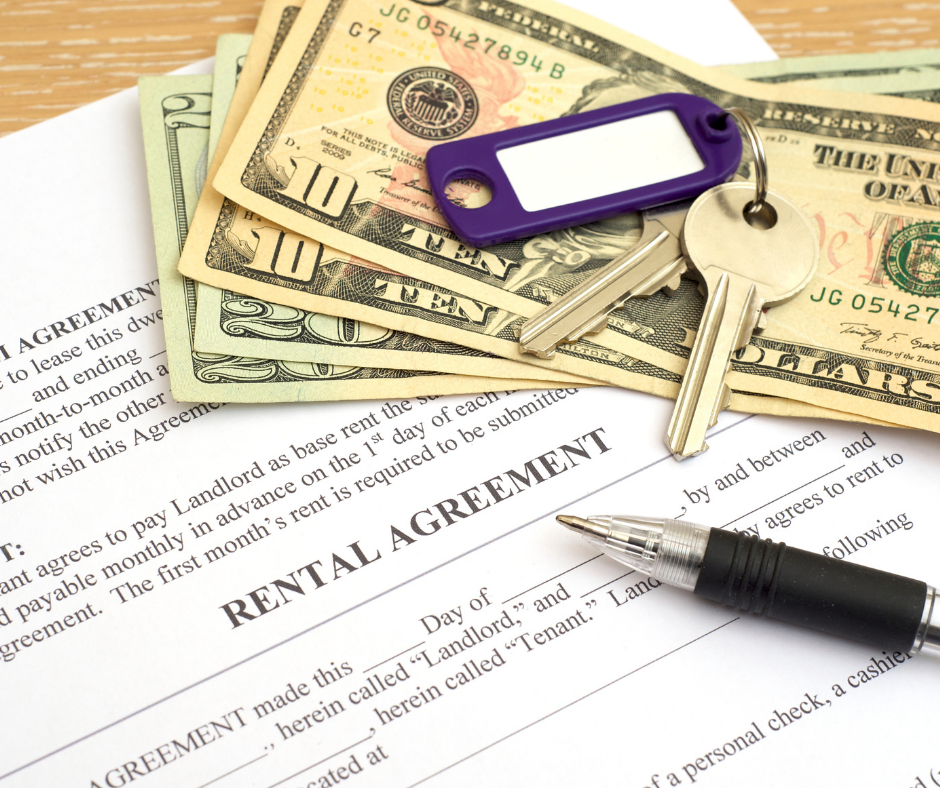
How to Avoid Rental Scams Rental scams occur when either a potential tenant or property owner misrepresent themselves or the availability of the property. This most commonly occurs when a person pretends to be a property owner or landlord of a property with which they have no connection. This is done to scam people out of money by asking them to sign a lease with a deposit required. Once money has been received, the scammer will cut off all connections with the potential tenant. When looking for rental properties, there are some easy ways to avoid these scams. Below are some tips for ensuring you are dealing with a legitimate landlord: Avoid Dealing in Cash When looking at potential rental properties, it is important to check the forms of payment that will be accepted for paying rent. Trustworthy property management companies will have multiple options for monthly lease payments. If a company only accepts cash for payments, this could be a sign that the company is not legitimate. Unless a receipt is given, there is no written record of cash payments. The lack of formal records makes cash payments the choice of scammers. Legitimate property management companies should offer multiple options for payment, with cash being one of those options. A person should investigate further into the company before signing a lease if cash is the only acceptable form of payment. Always Sign a Lease When looking to rent a property, a formal lease needs to be signed that defines the expectations for both involved parties. A lease is a written agreement in which a tenant and owner agree to the payment amount, property standards, and length. This document is important for providing a written record of an agreement occurring about the rental of a property. If a property management company wants to operate off of a verbal lease agreement, it is most likely not trustworthy. To avoid scams, a written lease is a necessary part of renting a property. Check Market Prices Unusually low rent prices can be a sign that a property is a scam. If a property seems too good to be true, it probably is. When looking at potential rental properties, it is important to check market prices for similar homes. This will give you an accurate estimate of what a fair price for rent would be for a property. A property with a below-market price needs to be investigated further to ensure that it is legitimate. The more information gathered about the property and its pricing of it, the more informed a decision a potential tenant can make. Conduct an In-Person Tour of the Property It is important to tour all potential rental properties before making a decision or signing a lease. Many scammers will post a rental property from pictures they found online with the intention of convincing potential tenants that they have the right to renting it. In these situations, the scammer will not have access to the property and will not be able to offer in-person tours. A person should be suspicious if a property management company does not provide the option of touring a home. In-person tours help to ensure that the person listing the property has access and rights to the property. CONTACT US We would love to hear from you! So let’s set up a meeting today. Please fill out the form and you will receive an email from us. If you do not get the email in the next 5 minutes, check your spam/junk folder. We will make sure that someone gets in touch with you as soon as possible. Leave us a message Jen Assip Property Manager Have any questions? Call us: 843-232-0000
Rental Safety Guidelines

Rental Safety Guidelines https://youtu.be/GQaPrhgFYwk According to the South Carolina Residential Landlord and Tenant Act, a property owner must “comply with the requirements of applicable building and housing codes materially affecting health and safety,” and to make repairs that uphold this obligation. In this article, we provide a list of common areas and home items that need to be checked regularly to uphold safety standards. Keep in mind, however, that safety standards vary depending on the local ordinances of cities and counties. As a result, it is always important to search for safety requirements on municipality websites during your property preparations and before renting it out to tenants. Smoke and Carbon Monoxide Detectors If your property does not have smoke detectors installed, it is likely to be non-compliant with safety standards, since many states have smoke alarm laws in place. These laws may also specify where the detector must be located, and require that the alarms be fully functional. If a property already has detectors, the property owner must inspect them regularly to ensure functionality. It is also important to replace batteries, as a detector with a low battery may lead to a malfunction. The National Fire Protection Association (NFPA) recommends changing smoke detector batteries at least once every six months. Another common detector that states are increasingly requiring is carbon monoxide detectors. Carbon monoxide can be very difficult to identify, so it is important to uphold local requirements regarding detectors. Both smoke and carbon monoxide detectors work to save your tenants’ lives in dire situations, so be sure to check your local laws for specific details on safety regulations. Doors and Locks A properly functioning door and lock are essential to allowing tenants to remain safe while living on your property. A door that fails to remain closed allows the risk of an intrusion, while a door that fails to open allows the risk of a fire evacuation hazard. To ensure doors are secure, it is recommended to equip doors with both deadbolt locks and a lockset. If you want to provide an even more secure solution, you may decide to provide a combination of electronic locks on doors. To ensure high quality and secure hardware, you may want to entrust installation with a professional. During routine inspections, make sure to also check that each door opens smoothly; if it does not, you may need to replace the hinges or install a new door altogether. As always, check your local ordinances for more information about home security measures. Pest Infestation While pesky pests are annoying, they are also unsanitary. Cockroaches, rats, mice, and other bugs and small creatures may be carriers of disease, causing your tenant’s safety to be at risk. The presence of pests can depend on how well the home is maintained, and/or the location of the property. In cases where pests are caused by climate, landlords are typically responsible for both preventing and getting rid of them. To do this, property owners may seek to use chemical measures. Using pesticides is a common way to prevent pest appearances, however, it is important to check with local laws provided by the Department of Health to determine whether they are allowed. If so, landlords should carefully choose pesticides to ensure they are registered and tested, and read directions for safely handling the chemicals. If an infestation prevails, property owners may seek extermination or fumigation services. Because both of these processes are robust and may provide the tenants with health risks, it is always important to seek a consultation with a professional and follow all specified safety guidelines they provide. Don’t forget to check local laws for more information about pest control regulations before considering any extermination processes. CONTACT US We would love to hear from you! So let’s set up a meeting today. Please fill out the form and you will receive an email from us. If you do not get the email in the next 5 minutes, check your spam/junk folder. We will make sure that someone gets in touch with you as soon as possible. Leave us a message Jen Assip Property Manager Have any questions? Call us: 843-232-0000
Property Management Terminology You Should Know

Property Management Terminology You Should Know https://youtu.be/xcCVQ9wcsPs Whether you are a tenant, property owner, or property manager, there are many terms you should know. Property management involves terminology that is many times unknown to the general public. To best operate in your role within property management, you need to be particularly familiar with words commonly used in these situations. Below are some of the common terminologies used in property management. Affordable Housing: Housing managed by the federal state government is offered to people who meet certain criteria. Typically rent for these properties is less than 30% of the tenant’s income. Apartment: A rented living space typically found in a large building intended for residential living. Broker: A real estate professional who buys and sells properties on behalf of clients in exchange for a commission. Condominium: A residential building with multiple units where each unit is independently owned. Co-Signer: A secondary signer on a lease who provides additional security and assurance for the property owner. Duplex: A house built with the intention of two families residing on the property. The house is divided into two completely separate units, so the families still have independent and private units. Equal Housing Opportunity: The right of American citizens to have the opportunity to reside in a community regardless of their race, religion, gender, race, nationality, and sexual orientation. Eviction: The removal of a tenant from a property due to lease agreement violations and/or unpaid rent. Eviction Notice: A legal notice is given by a property owner to a tenant that informs why the tenant is being evicted and the reason for the eviction. Fair Housing Act: A law that prohibits discrimination in the housing market based on gender, race, religion, age, disability, and family status. Homeowners Association (HOA): An organization consisting of homeowners that creates and enforces rules and guidelines for all homes and condos located within that neighborhood. Lease: A written agreement between a property owner and a tenant about the terms of the tenant’s occupancy of a rental property. These terms include the rent payment amount, length of the lease, and any other regulation a tenant needs to be notified of. Long-Term Rental: A rental property whose lease lasts for a year or more. Property Manager: Someone who manages rental property for the owner of the home. The services include accounting, rent collection, marketing, and tenant relationships. Property managers are paid through a percentage of the rental income collected. Renter Insurance: Insurance policies that must be carried by tenants of rental properties to cover personal belongings and potential liability problems. Security Deposit: A payment taken by a property owner from tenants at the beginning of the lease to be used in case of damage occurring throughout the time of their residency in the property. If no damage occurs, tenants will receive back this payment once they move out of the property. Walk-Through Inspection: An inspection conducted by the property owner at move-in and move-out of the property. The property owner checks for issues, missing items, and damage to the property. https://www.youtube.com/watch?v=9E2AIlMyyCg CONTACT US We would love to hear from you! So let’s set up a meeting today. Please fill out the form and you will receive an email from us. If you do not get the email in the next 5 minutes, check your spam/junk folder. We will make sure that someone gets in touch with you as soon as possible. Leave us a message Jen Assip Property Manager Have any questions? Call us: 843-232-0000
Keeping Your Oven Clean
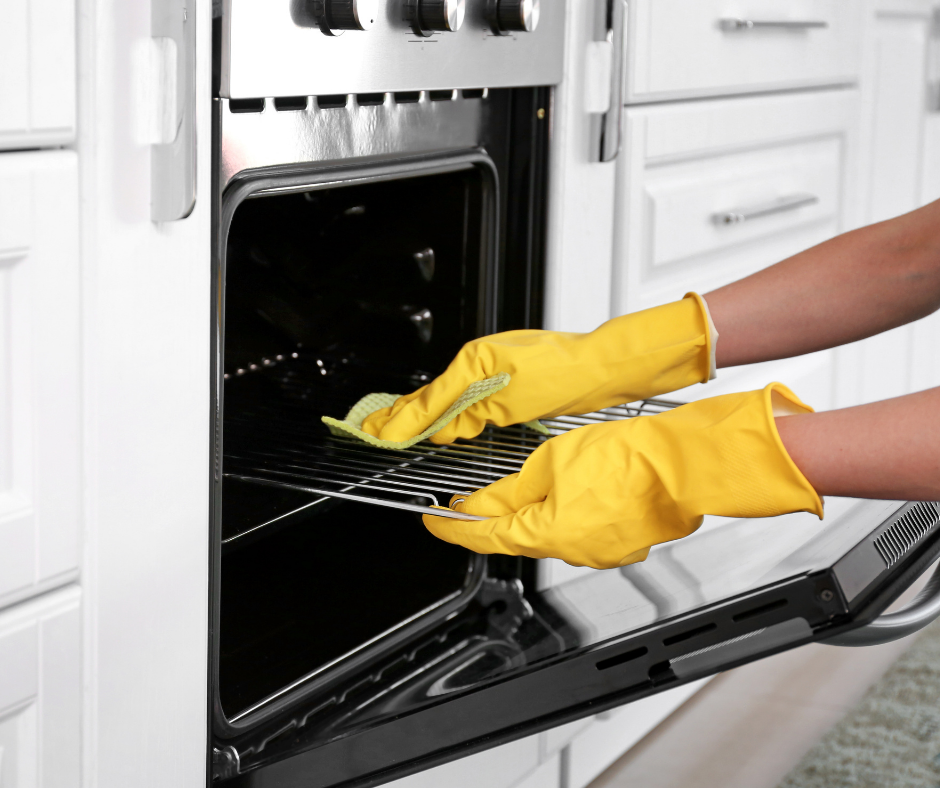
Keeping Your Oven Clean https://youtu.be/AtCK_yg7XH4 Ovens are an essential part of every kitchen and can be quite a pricey investment. Because they are used almost daily, ovens trap grease and crumbs, causing food build-up and residue to accumulate over time. Failure to maintain your oven could result in discoloration, excessive smoke, and overheating; not to mention the possibility of adding a hazardous taste and odor to your food baked inside. While cleaning an oven is not the most pleasant task, proper care is essential for safely baking food and extending the lifetime of your appliance. To ensure your food stays safe to eat, and your oven remains a beautiful kitchen centerpiece, we have gathered some tips for keeping your oven clean. Deep Cleaning Routine Deep cleaning your oven is the best way to start fresh in creating a healthy culinary environment. While many ovens today may offer an auto-cleaning function, oven specialists recommend regularly performing a manual deep clean for a thorough job. To avoid harsh chemicals that may be deposited onto your food, experts recommend using white vinegar as a natural cleaning compound, alongside baking soda for scrubbing. You will also need to gather rubber gloves to protect your hands and a spatula for mixing your cleaning solutions. Before cleaning, make sure your oven is off and completely cooled. It is important to note that the deep cleaning process may take 8-12 hours, so choose a day that you know your oven will not be needed. Start by removing your oven racks and placing them into white vinegar and a warm water solution. While there are many ways to measure the amount of vinegar compared to water, a one-to-one ratio is commonly used for this step. Next, make a paste by combining baking soda and spoonfuls of water. This paste should be spread along with the interior of the oven and left to rest for 8-12 hours, or even overnight. Once the time has finished, and your baking soda mixture is brown, wipe the paste off with a damp sponge or rag. Remove your oven racks from the vinegar solution and allow them to dry. Upon drying, place them back into the oven, keeping the door open for the interior to completely dry. https://youtu.be/RiI4i0lLs3E Regular Cleaning Tips Once your oven has been deep cleaned, you may be able to reduce the amount of work you have to do next time by following these tips. The first tip is to prevent messes at their source by avoiding food spills. If you are cooking something that has the potential to bubble over a pan, or be quite messy, place a baking sheet on the rack below to catch any food that may fall during the baking process. Oven liners are another great option for preventing messes. You can line the base of your oven with a piece of foil, or buy easy-clean oven sheets. These products are available in many different sizes and are often reusable, so mess prevention is as effective as possible. If you do not have access to these products, or a mess still occurs during baking, turn the oven off, allow it to cool slightly, then immediately wipe up the spill, being careful to not touch your skin to the surface. If grease and food stains still prevail, choose natural cleaning products that include citruses on their ingredient list, since citrus oils are known to be tough on stains and grease. If your meal did not leave a visible mess in your oven, crumbs and oils are still likely present. Performing a light cleaning after each use is a great way to ensure food build-up does not occur. This can be done by simply wiping your oven interiors with a damp sponge, or creating a white vinegar and water spray for the interior. CONTACT US We would love to hear from you! So let’s set up a meeting today. Please fill out the form and you will receive an email from us. If you do not get the email in the next 5 minutes, check your spam/junk folder. We will make sure that someone gets in touch with you as soon as possible. Leave us a message Jen Assip Property Manager Have any questions? Call us: 843-232-0000
Answering Property Inspection Questions

Answering Property Inspection Questions https://youtu.be/-sl6vR_k3Gk Property inspections are an integral part of owning, managing, and occupying rental properties. Inspections are essential for both maintaining the rental property and developing a good tenant-landlord relationship. This allows both parties to be informed about the standards and conditions of the property. These inspections are not only crucial for rental properties, but for tenants, owners, and property managers. Everyone involved must have a firm understanding of all aspects. Below are the answers to some of the most common property inspection questions. What is a property inspection? A property inspection occurs when a property manager comes to the rental property to assess the interior and exterior condition of the home. The property manager will also note any damage that needs to be addressed by either the tenant or the management company. Many times, the inspection occurs while the tenant is present. This allows for easy communication of the results of the inspection and ensures that the tenant is well-informed about all standards for the property that must be met. This is also a time at which the tenant can notify the property manager of any damage or repairs that need to be fixed. Why are they performed? Property inspections are essential for ensuring that the property is within acceptable standards. Tenants, owners, and property managers all have a vested interest in keeping the property well maintained. Tenants are residents of the property and therefore reside in whatever condition the property is in. The owner has a financial commitment attached to the property and wants to ensure that their investment is performing well. The property manager works for the owner and is responsible for evaluating and maintaining the property for the owner. When are they performed? Property inspections are performed at various times throughout the lease of a tenant. The first inspection that occurs is the move-in inspection. The tenant and the property manager are present to walk through the property and note any damage to the home that the tenant will not be responsible for in the future. Routine inspections will occur periodically throughout the lease to ensure that the property is still in acceptable condition. These inspections are scheduled ahead of time whereas the tenant and the property manager are present. Once a tenant decides to move out of the property, a move-out inspection will be conducted. The move-out inspection will occur on the day the tenant vacates the property. This inspection occurs to assess any damage or repairs the tenant is responsible for fixing. What happens during an inspection? With all inspections that occur on a rental property, the property manager will give the tenant notice ahead of time. This allows for a time to be scheduled where both parties can be present and ensures that the tenant is prepared for the inspection. Another extremely common part of property inspections is for the tenant to be encouraged to be present. The tenant being present ensures that there are no breaks in communication about the property and what repairs or maintenance are needed. What does not happen during an inspection? Inspections can seem uncomfortable for both tenants and property managers since they are inspecting an area that has personal belongings and pictures. Property managers will always be respectful of personal property and will be as non-invasive as possible while checking all necessary areas. If necessary, the property management company takes photos and will make certain to avoid including any identifiable personal items in the photos. Property managers are also professionals who are trained to avoid conflict with tenants or other involved parties. These property inspections will help any tension between the tenant and the property manager and will lead to a solid relationship. Leave us a message Jen Assip Property Manager Have any questions? Call us: 843-232-0000